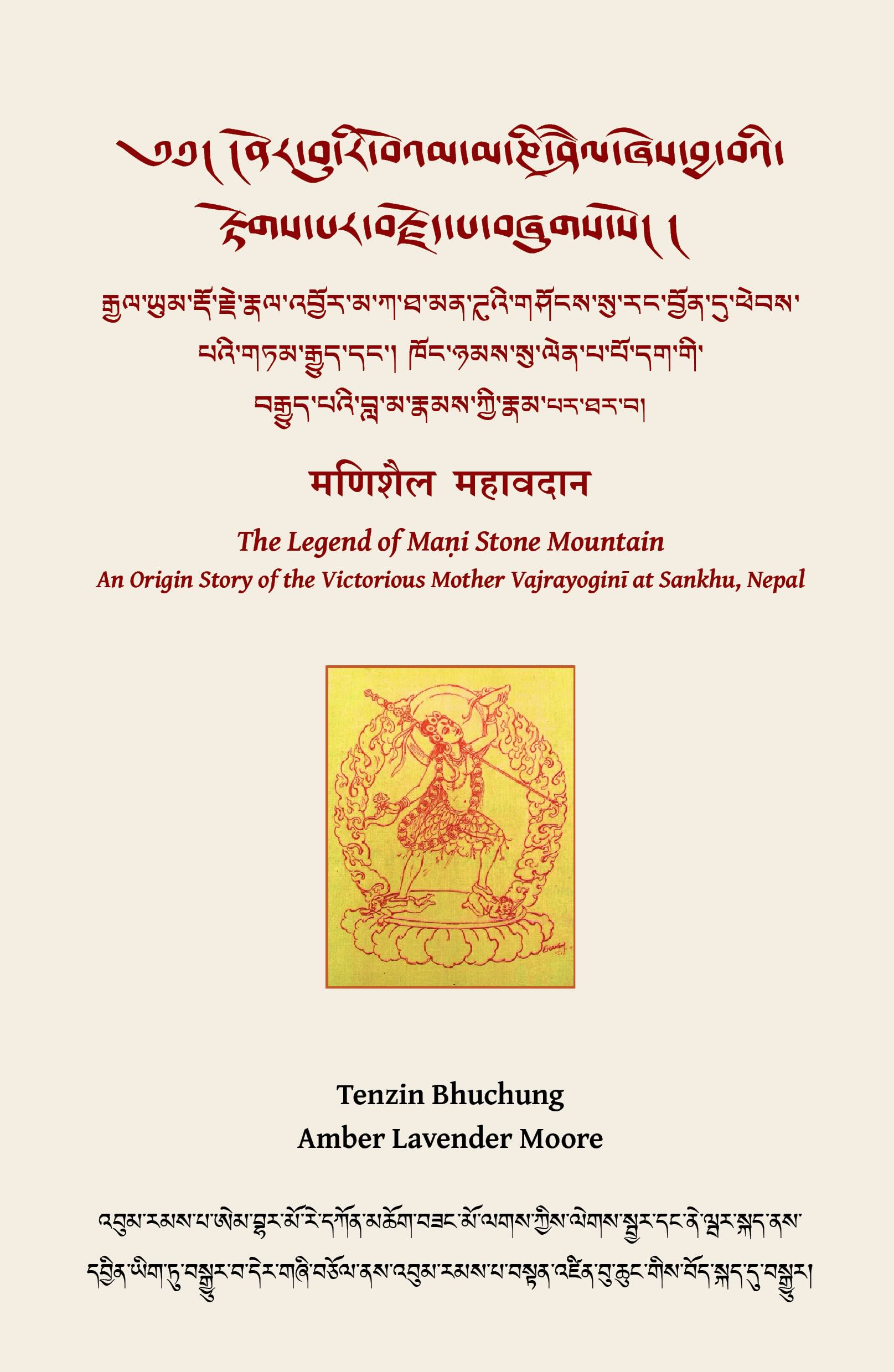
Description
“In the Satyayuga age, in the place called ‘Nepāla’, up on Mount Maṇicūḍa, there was a maṇi‑stone that sparkled and shone ever so brightly like an inlaid solitaire maṇi‑jewel. In this place Śrī Ugratārā Vajrayoginī Devī is said to have manifested spontaneously of her own accord as the essential nature of a divine flame from a hole in the middle of a wide and massive stone.”
~ Maṇiśailamahāvadāna
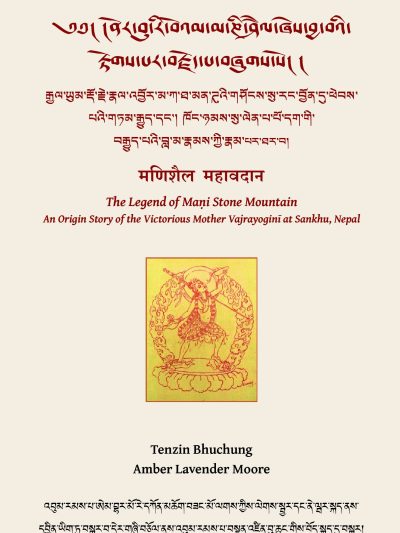
Sankhu Vajrayoginī is a historic Newar vihāra in Nepal that has long been a popular place of pilgrimage for Tibetan Buddhists at the center of Himalayan trade and Buddhist transmission between Nepal and Tibet. Yogins have gathered at this hillside site with its nine caves and nine ponds to complete their spiritual journeys for over a millennium. Marpa Lotsawa and the 7th Century Nagārjuna are said to have completed retreats here, Padmasambhava met Sakya Devi, and the Tibetan King Songtsen Gyalpo married the Nepalese princess Bṛikuṭī Devī at Sankhu.
This book contains a Tibetan translation of the Maṇisailamahāvadāna, a Sanskrit and Newar work which tells the origin story of Vajrayoginī at the ancient Padmamāla vihāra nestled on Mount Maṇiśaila. Also known as Ugratārā, Ekajāṭī, Mahācīnatārā, Nīlatārā and Prajñāpāramitā, Sankhu Vajrayoginī is one of the greatest grandmothers of royal and yogic lineages. This book includes accounts of meditators pursuing the path of complete and perfect awakening without whom Vajrayoginī could not continue to stay at her abode. The tale of a sacred place where the flora is magical and can revive one from death, where the buzzing of bees pervades the mountain like the syllable hung, and wild animals coexist with loving kindness for one another, this is the avadāna of Ugratārā Vajrayoginī on Maṇi Stone Mountain.