Description
From the Preface
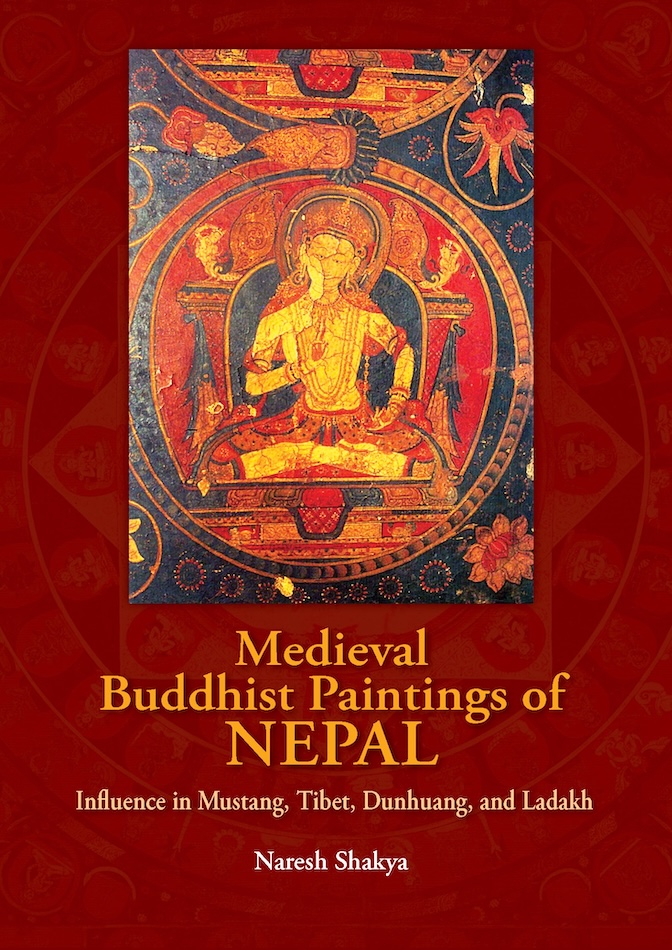
Buddhist paintings on scrolls, murals, manuscripts, and long narrative scrolls have been an integral part of Newäh society in the Kathmandu Valley. In Newäh communities, the art of painting has been employed for everyday purposes, from lifecycle rituals to the depiction of important Buddhist and Hindu deities for religious practices. Painting is a fundamental component of all Buddhist rituals, essential to undertaking ceremonial activities. From the commencement of painting to its conclusion with a life-giving ceremonial ritual, it is regarded as a meritorious act according to Buddhist beliefs. Due to its extensive use in the Kathmandu valley, Newan artists became master painters. The tradition of painting in the Valley has been firmly established since the Licchavi period, traceable through the accounts of Chinese pilgrims/travelers and inscriptions that provide historical evidences corroborating its existence.
During the medieval period in Nepal, the painting tradition emerged as an even more vital art form. Painting styles were adopted from different Indian techniques and were improvised with distinctly Newäh characteristics, which later gained popularity throughout the neighboring Himalayan regions and in several parts of China. The marriage of the Nepali Princess Brkuti Devi to Songsten Gampo in the seventh century CE became legendary. According to Tibetan sources, she is believed to have brought numerous artifacts from Nepal to Tibet. Since that historic event, there has been a continuous flow of Newãh artists to Tibet, where they created significant Buddhist artworks. Unfortunately, due to the prevailing tradition of omitting the names of artists from painting inscriptions, it has been very difficult to determine the records of Newäh artists in these regions. Taking this challenging situation into account, I explored the artistic sphere of Newäh artists and their artworks in Mustang, Tibet, Dunhuang (China), and Ladakh (India). To investigate the Newäh influence, I meticulously analyzed and compared elements such as the painting process, ingredients used, documented artists of the period, and prominent features of Newäh paintings. Following an extensive personal survey in these regions, I discovered strong influences and striking similarities between Nepalese painting traditions and the artworks found in Buddhist monasteries and cave temples across Mustang, Tibet, Dunhuang, and Ladakh.